
Calorie Tracker Bot: How to Build a Telegram Food Logging MVP
A calorie tracker bot is useful when the business goal is not just "count calories", but daily engagement. Most nutrition products lose users because logging a meal takes too many taps. A Telegram bot can reduce that friction: the user sends a photo, voice note or short text message, and the bot returns an estimated calorie entry in seconds.
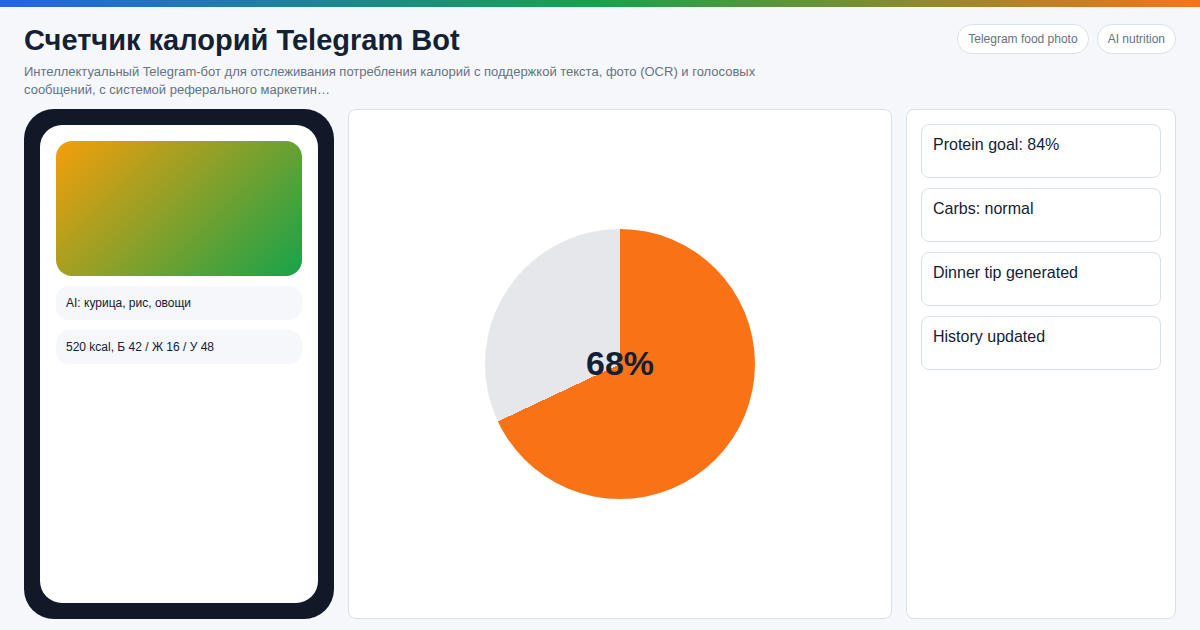 This article is for founders, fitness communities, nutrition coaches and agencies planning a health-tech MVP in 2026. It is not medical advice and it should not replace a dietitian. The practical question is narrower: what should you include in a food logging bot so users keep recording meals after the first week?
Key takeaways
- The fastest useful input flow is photo first, then voice, then structured text for corrections.
- A realistic MVP can start with Telegram, AI food recognition, daily goals, time-zone resets and referral links.
- The bot should show estimates with confidence, not pretend that camera-based calorie counting is exact.
- Retention depends on small workflow details: pinned chat prompts, personal daily summaries and low-friction correction buttons.
- AI-assisted content and product planning were used for this article; the recommendations are based on our implementation experience with a live Telegram nutrition bot.
Why Telegram Works for Food Logging
Food tracking is a habit product. Asking users to install another app, create an account, search a food database and enter grams manually is too much work for casual users. Telegram removes several steps: users already know how to send a picture or voice note, and the bot can stay next to their daily chats.
In our experience, the best first session is short:
- Ask for a daily calorie target.
- Explain that the bot accepts photo, voice and text.
- Log the first meal immediately.
- Show today's remaining calories.
- Save name, time zone and preferred language for the next session.
Do not start with a long onboarding questionnaire. Collect details only when they improve the next answer.
Input Methods to Support
| Input method | Best use case | Product note |
|---|---|---|
| Photo | Restaurant meals, plates, packaged food labels | Return an estimate and ask for correction when portion size is unclear. |
| Voice | Quick logging while walking or cooking | Transcribe, normalize food names and ask one short follow-up only if needed. |
| Text | Precise entries such as "200 g rice and 120 g chicken" | Use this as the correction path and for power users. |
| Manual calories | Supplements, snacks, known meals | Let users override the AI estimate without arguing with the bot. |
The important design rule is transparency. A photo can identify a dish, but it cannot always know oil, sauce, hidden ingredients or exact weight. The bot should say "estimated" and make correction easy.
MVP Scope for a Calorie Tracker Bot
A practical MVP should include:
- User profile: daily target, time zone, name and basic preferences.
- Food parser: photo recognition, speech-to-text and text normalization.
- Nutrition estimator: calories first, optional protein, fat and carbohydrates later.
- Daily ledger: entries, remaining target and reset at local midnight.
- Correction flow: one-tap "too high", "too low" or "edit grams".
- Referral tracking: unique invite links for campaigns and community growth.
- Admin export: simple CSV or Google Sheets export for cohort analysis.
For a first build, avoid complex meal plans, social feeds and paid subscriptions unless they are central to your business model. The retention signal you need first is whether people log meals for 7-14 days.
Common Product Mistakes
The first mistake is overclaiming accuracy. "AI knows exactly how many calories are in your food" is not credible. A better promise is "AI makes logging fast, and you can correct the estimate when needed."
The second mistake is treating all users the same. A coach may need client dashboards and weekly reports. A creator may need referral campaigns and branded messages. A startup may need experiments, analytics and payment flows. The same bot architecture can support all three, but the MVP screens should be different.
The third mistake is ignoring safety. A health product should avoid extreme calorie recommendations, avoid diagnosing eating disorders and route medical questions to qualified professionals. Keep the bot focused on logging and habit support.
Frequently asked questions
Can a bot calculate calories from a photo?
Yes, it can estimate calories from a photo when the dish is visible, but the estimate should be treated as approximate. Portion size, oil and hidden ingredients can change the result. A good bot shows the estimate and lets the user correct it quickly.
Is Telegram enough for a nutrition MVP?
For early validation, yes. Telegram is usually enough for logging, reminders, referrals and admin exports. A mobile app becomes useful later if you need Apple Health, Android Health Connect, offline mode or deeper wearable integrations.
What should a business measure after launch?
Measure first meal completion, day-2 return, 7-day active users, average entries per active day, correction rate and referral invites sent. These numbers show whether the bot is reducing friction or just generating curiosity.
How long does a custom build take?
A focused MVP usually takes 1-3 weeks when the scope is limited to Telegram, AI input processing, daily tracking and basic analytics. More time is needed for payments, coaching dashboards, wearable integrations or clinical compliance requirements.
Sources
- Google Search Central: creating helpful, reliable, people-first content
- Telegram Bot API documentation
- OpenAI Vision guide
Telegram calorie tracker development starts from 300 USDT for a focused MVP with source code handover. Message @onoutnoxon to discuss your product flow, audience and launch plan.
Learn more on the product page: Calorie Tracker Bot.
About the service "Calorie Tracker Bot 2026: AI Food Logging in Telegram"
How to build an AI calorie tracker bot for Telegram: photo, voice and text food logging, retention mechanics, data checks and MVP scope.