
Crypto AML Checker: A Practical Telegram Workflow for Small Exchanges
A crypto AML checker helps operators screen wallet addresses before a transaction is accepted. For a small exchange or OTC desk, the goal is not to imitate a bank compliance department. The goal is to make risky addresses visible, apply consistent rules and keep evidence that the team checked before moving funds.
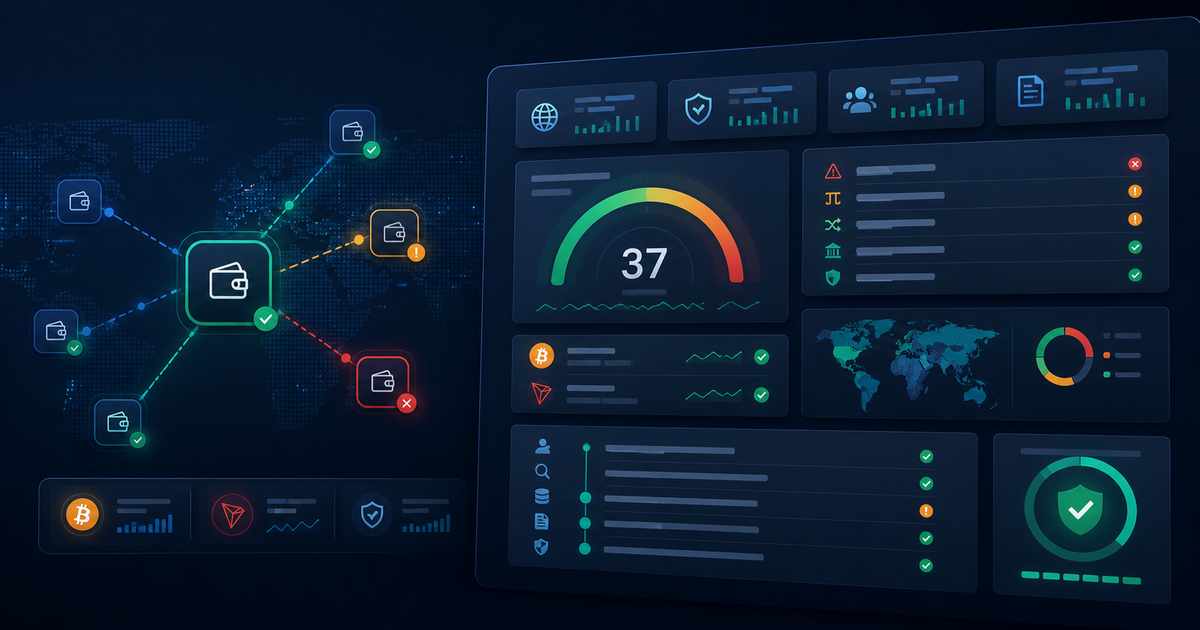 This guide is for product owners, exchange operators and fintech teams planning an AML automation MVP in 2026. It is not legal advice. Regulations differ by jurisdiction, and a compliance officer or qualified counsel should approve your final policy.
Key takeaways
- Start with the chains that actually drive volume. For many small desks, Bitcoin and TRON cover the first operational need.
- The operator workflow matters as much as the data provider: paste address, get risk score, see categories, decide, log result.
- A Telegram bot is useful for internal teams when speed is important and operators already coordinate in Telegram.
- Risk categories should be explainable: sanctions, scam, darknet, mixer, stolen funds, high-risk exchange and unknown exposure.
- AI-assisted drafting was used for this article. In our experience building internal Telegram tools for exchange operations, the workflow recommendations below are the parts teams actually use during live transactions.
What a Crypto AML Checker Should Do
At minimum, the system should answer five questions:
- Is the address valid for the selected chain?
- Has the address or a related cluster appeared in a high-risk category?
- What is the risk score and why?
- What action should the operator take?
- Was the check logged with timestamp, operator and result?
The output should be short enough for an operator to use during a live transaction. A useful response looks like this:
| Field | Example |
|---|---|
| Chain | BTC or TRON |
| Risk level | Low, medium, high or blocked |
| Categories | Sanctions, mixer, scam, stolen funds, darknet, exchange exposure |
| Recommendation | Approve, request review, request documents or reject |
| Evidence | Provider result ID, timestamp and checked address |
Why Telegram Can Be the Right Interface
Many small exchange teams already coordinate orders in Telegram. Adding a command such as /aml ADDRESS keeps the check inside the existing workflow. The bot can return a result in a few seconds, store a log and notify a senior operator when the score crosses a threshold.
Telegram is not enough for every compliance program. If you need multi-level approvals, case management, regulator exports and customer due diligence files, build an admin panel too. But for the first automation step, a bot can remove the worst habit: manual copy-paste checks that nobody records.
Risk Rules to Define Before Development
Do not start by choosing a vendor. Start by writing the decision table:
| Situation | Suggested action |
|---|---|
| Direct sanctions exposure | Reject and escalate. |
| Recent mixer exposure | Manual review or reject, depending on policy. |
| Scam or stolen funds exposure | Manual review with supporting documents. |
| Low-risk exchange exposure | Usually approve if customer profile matches. |
| Unknown or unsupported chain | Do not approve automatically. |
Your team can then connect a provider such as Chainalysis, Elliptic, Crystal Blockchain or another regional AML data source. The important point is consistency: the same score should lead to the same operator action.
MVP Architecture
A focused MVP usually includes:
- Telegram bot command for address checks.
- Address validation for Bitcoin and TRON.
- AML provider adapter with retries and timeout handling.
- Risk normalization layer so different providers map to one internal scale.
- Operator log with address, chain, score, categories and decision.
- Admin export for compliance review.
- Alert rules for blocked or high-risk categories.
The system should never expose sensitive customer notes in a public group. Use private chats, restricted groups or an internal dashboard for detailed review.
Frequently asked questions
Does every small crypto exchange need AML checks?
If the business handles third-party crypto transactions, it should treat AML screening as a core operational control. FATF guidance applies AML and counter-terrorist financing expectations to virtual assets and virtual asset service providers. Local obligations vary, so policy must be reviewed for your jurisdiction.
Can a Telegram AML bot replace a compliance officer?
No. The bot automates screening and logging. It does not replace policy ownership, customer due diligence, suspicious activity review or legal responsibility.
Which chains should be supported first?
Start with the chains used in real transactions. For many small desks, Bitcoin and TRON are enough for an MVP. Add Ethereum, stablecoin networks or other chains when volume justifies the extra provider cost and operational complexity.
What makes the logs useful?
Logs are useful when they show who checked what, when, which provider result was returned, what category triggered the score and what decision was made. A screenshot in chat is not enough.
Sources
- FATF guidance on virtual assets and VASPs
- FATF targeted update on implementation of standards for virtual assets and VASPs
- Google Search Central: Creating helpful, reliable, people-first content
Crypto AML checker development starts from 300 USDT for a focused internal workflow with source code handover. Message @onoutnoxon to discuss chains, provider options and operator rules.
Learn more on the product page: Crypto AML Checker.
About the service "Crypto AML Checker 2026: Telegram Workflow for Exchanges"
A practical guide to building a crypto AML checker for small exchanges: address screening, risk categories, operator workflow and audit logs.