
P2P Exchange and AML Compliance 2026: How to Avoid Getting Blocked
Working with exchangers, I have seen several shutdown cases. In all of them, one common pattern: the problem accumulated gradually and could have been prevented by a basic address check before each deal. This is not paranoia — it is math.
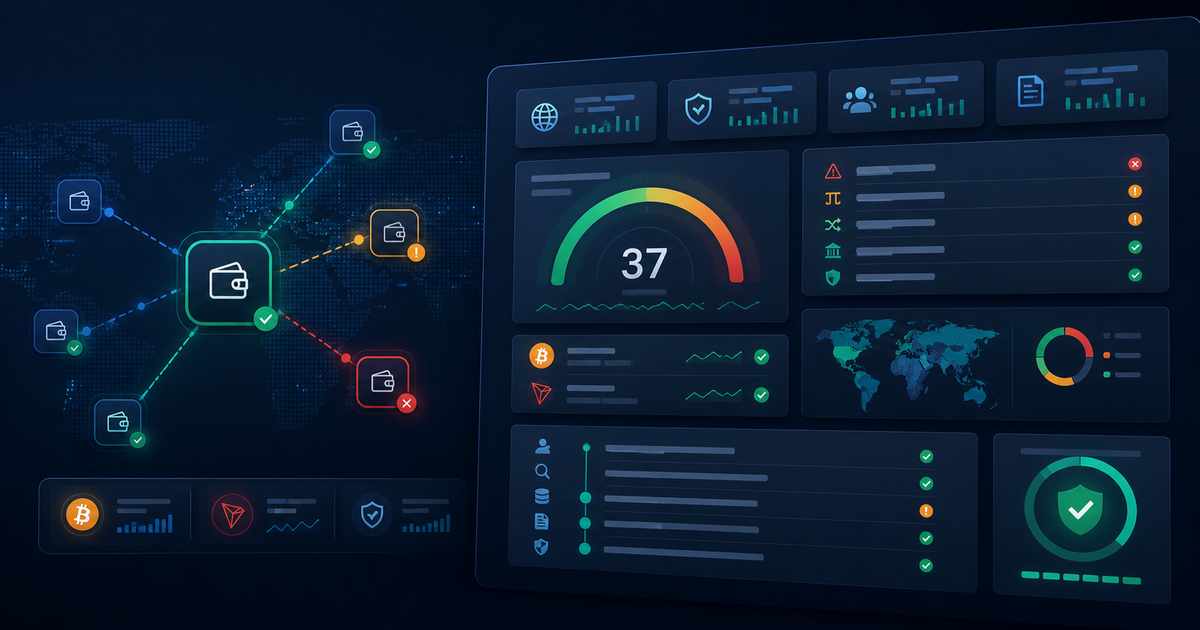 Analytics companies document: 60% of crypto business shutdowns are linked to transactions that could have been declined based on AML screening results. 35% — sanctioned addresses, 25% — darknet market connections.
Key facts
- 60% of shutdowns are preventable by checking the address before the deal — this is documented data
- FATF Recommendation 15: any VASP must screen transactions — P2P exchangers fall under this
- Implementation via Telegram bot: 1 day including setup and operator training
- Cost of implementation: 300 USDTles vs loss of license and reputation
During rollout planning for crypto aml checker, the recurring issue was not feature quantity but whether a buyer could verify limits, exports, integrations, and ownership before committing.
Why Exchanges Get Blocked: Breakdown by Cause
| Cause | Share | Prevention |
|---|---|---|
| Sanctioned addresses (OFAC, EU, UN) | 35% | AML screening every incoming address |
| Darknet market connections | 25% | Risk category screening |
| No AML/KYC procedures | 20% | Implement compliance policy |
| Mixers and tumblers | 15% | Automated category filtering |
| Scam, phishing | 5% | Current blocklist monitoring |
Total: 60% of shutdown causes are addressed by a single step — checking the address before the deal.
What FATF Requires in 2026
FATF Recommendation 15 (updated 2023) requires VASPs to:
- Identify transaction parties
- Screen addresses against sanctions lists
- Maintain screening logs
- Apply enhanced due diligence for high-risk transactions
- File Suspicious Transaction Reports (STRs)
The minimum compliant scenario: screen client addresses before each deal and store the screening history. A Telegram bot with /aml command covers requirements 2, 3, and partially 4.
How the System Works Internally
When an operator enters /aml [address], the bot: 1. Queries the AML provider API (Chainalysis, Crystal, or equivalent) 2. Receives a risk score: category + percentage connection to high-risk sources 3. Applies your rules: e.g., "block if sanctions or darknet > 50%" 4. Returns a recommendation + logs the check with operator, timestamp, address, result
Time: 3-5 seconds. Exchange rate calculated in parallel.
Implementation in 3 Steps
Step 1. Audit current processes. Is there a transaction log? Are addresses being checked? If not — you are already at risk. The bot covers 80% of FATF requirements in 1 day.
Step 2. Automated screening. /aml + address — result in 3-5 seconds. Clean — proceed. Tainted — decline and log the reason.
Step 3. Compliance policy. We provide a policy template: risk thresholds, escalation rules, STR procedure. You adapt it to your processes.
FAQ
What if a client finds out their address is being screened?
This is standard practice. Most legitimate clients understand and accept screening. Those who object — that is a signal in itself.
What is the minimum compliance for operating without major risk?
Minimum: screen every incoming address, store logs for 5 years. The Telegram bot does this out of the box.
Cost — 300 USDT per project. Write on Telegram: @onoutnoxon — we will connect AML screening to your exchange.
Crypto AML Checker Bot | AML Service Comparison | Telegram Bot for Exchange
Updated: 2026-04-15
Sources: - https://www.fatf-gafi.org/en/topics/virtual-assets.html - https://complyadvantage.com/insights/crypto-aml-compliance/
Created with AI tool support for outline and consistency checks; reviewed by Alexander Ruin, founder of onout.org for onout.org. Updated: 2026-05-01.
About the service "P2P Exchange and AML Compliance 2026: How to Avoid Getting Blocked"
AML compliance for P2P crypto exchanges: real shutdown causes, FATF requirements, and how to implement address screening via Telegram bot in one day.